2026
Auckland
Tāmaki School is a Year 1-8 East Auckland primary school with a roll of 179 students. To cater to the diverse cultural needs of its ākonga, as well as English medium, the school offers Samoan and Tongan language immersion programmes, and a Māori language immersion (rumaki) programme known as Te Puna Wairua (TPW) with 53 students. A puna is a spring, a source from which life flows, and wairua is the spirit and identity of the child.
Tāmaki School is a Year 1-8 East Auckland primary school with a roll of 179 students. To cater to the diverse cultural needs of its ākonga, as well as English medium, the school offers Samoan and Tongan language immersion programmes, and a Māori language immersion (rumaki) programme known as Te Puna Wairua (TPW) with 53 students. A puna is a spring, a source from which life flows, and wairua is the spirit and identity of the child.
Leading TPW is Whaea Lee Tutengaehe. Coming from a background teaching in kura kaupapa, she was drawn to Tāmaki School by the vision of the then principal, Rhonda Kelly who recognised the inequities Māori learners were experiencing, and wanted to create a space where they would thrive, strong in their identity.
When Whaea Lee arrived over seven years ago, there was an enrichment Māori class and her dream then was to grow Te Puna Wairua into its own entity, a school within a school.
Teaching across such a wide age group, and with a range of proficiences in te reo Māori, requires a unique set of teaching skills.
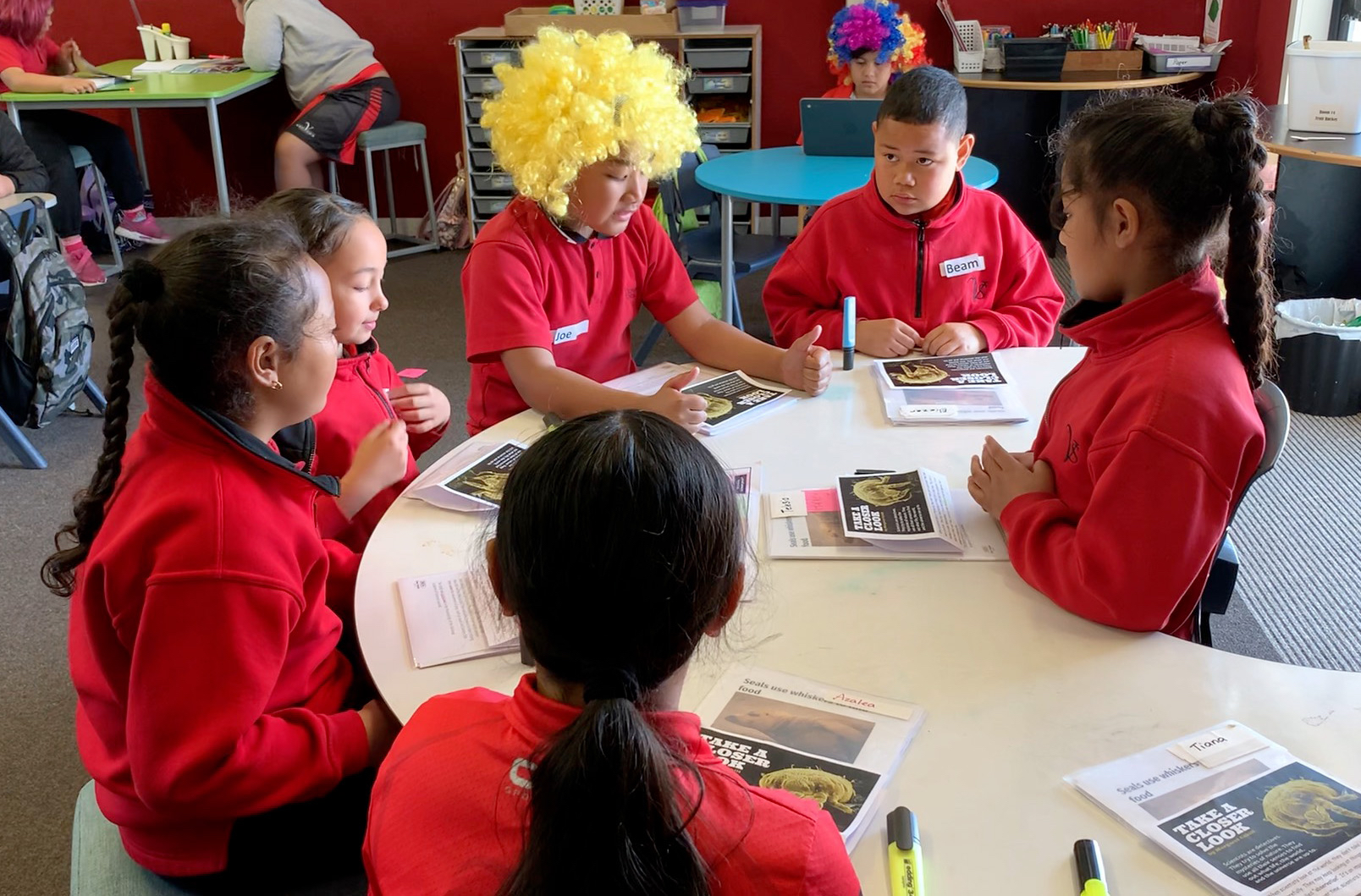
TPW prides itself on the inclusivity of its classrooms which are organised using the kaupapa Māori principle of tuakana-teina. This means older, more experienced ākonga are supporting those younger and less experienced with their learning. It is a common sight to see a Year 6 student working alongside a Year 2 student, sharing knowledge, helping with language or modelling confidence.
Pairing students is strategically planned. Curriculum knowledge is more important than age. There could be a teina who is older than the tuakana but that’s because the teina has more knowledge of that particular kaupapa. Siblings or students who don’t get along are not usually paired together. Tuakana and teina are deliberately changed often so they get to know everyone and don’t become reliant on any particular tuakana. The teacher is trying to build lasting relationships between all of them, not just a select few.
Learning in this way strengthens whanaungatanga, as ākonga learn that they have responsibility for one another’s growth. It also strengthens mana, as each child realises they have knowledge and experience that can support others. In this environment they are not defined by ability levels, but rather within a collective learning community where knowledge is shared.
“A clear example was when my middle child started school, she’d come from a mainstream daycare and so the transition into a Māori room and world was always going to be quite daunting. What they did when she started school, she was welcomed with a pōwhiri, then she was paired with older girls so she instantly had an older sister, a kaitiaki, a tuakana, who wrapped around her and those tuakana were assigned teina. When she started she was shy, was super scared, but the second that student wrapped around her, and they were so caring, they were really lovely - like they hugged her, showed her to her chair, helped her put her bag away, showed her the routine of the day and they did it with her every day.” Parent
Teaching multi-year levels is challenging. It requires careful planning and flexibility. It also creates a strong sense of whānau, collective responsibility and shared learning.
The timetable is organised to ensure every group works with each of the three teachers at least twice a week. This allows teachers to provide more intentional support while still maintaining collaborative and mixed-age learning environments. The tuakana-teina model is also essential in supporting multi-year level teaching.
Within TPW, reo proficiency is an important consideration. Some tamariki are still developing confidence in te reo Māori, while others are already strong speakers. Flexible grouping allows teachers to support these different needs more intentionally.
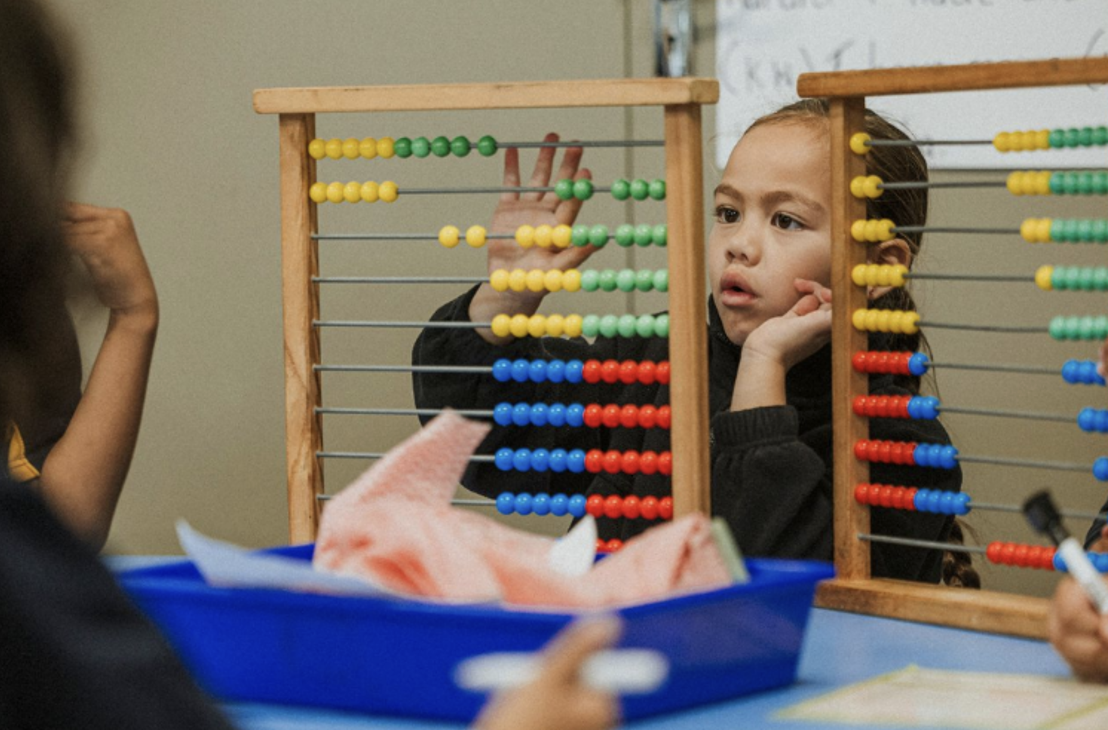
In pāngarau, rotational learning stations and games are used to support engagement and independent learning. While ākonga rotate through activities, teachers work with targeted level groups for explicit teaching that aligns to their marautanga needs. The tuakana-teina model is very important during this time. Tuakana often support teina through games, mathematical language, and modelling strategies. This creates a collaborative environment where learning is shared rather than individualised or competitive. Rotations allow teachers to provide focused teaching while still maintaining active learning opportunities for the rest of the class.
Tuhituhi often begins with whole-class teaching, particularly when introducing a genre, kaupapa, or shared writing experience. The learning intentions and expectations are differentiated depending on the reo proficiency and writing ability of each group. Some ākonga may still be developing simple sentence structures and vocabulary, while others are capable of writing more detailed and expressive pieces in te reo Māori. Teachers provide explicit teaching, modelling, oral language support, and conferencing with groups or individuals as needed. The tuakana-teina model is also visible here, particularly through peer support, oral rehearsal, and collaborative planning before writing.
Pānui is organised slightly differently. Ākonga are usually grouped according to reading level and reo proficiency. During reading time, one group works directly with the kaiako for explicit teaching around decoding, comprehension, vocabulary, fluency, and discussion of the text. While this focus group is working with the kaiako, the other groups complete independent or collaborative activities linked specifically to the books they are reading. Once explicit teaching is completed, the teacher rotates to the next group. This structure allows provision of targeted support while still encouraging independence, oral language, and tuakana-teina learning.
The overall approach within TPW is flexible rather than rigid. They move between whole-class teaching, workshops, rotations, targeted group teaching, and collaborative learning depending on the kaupapa and the needs of the ākonga. Relationships are central. Multi-level teaching requires strong systems, clear routines, and deep knowledge of learners, but it also creates rich opportunities for leadership, ako, and collective responsibility within the classroom.
One of the most important foundations is the partnership between home and school. Whānau are welcomed into the learning space and are seen as an essential part of the learning journey. Parents and whānau are welcomed into TPW, so they and their tamariki get that sense of belonging, creating a whānau environment.
Over time whānau have become deeply involved in the life of TPW. Many parents have begun learning te reo Māori themselves, attending whānau organised reo lessons so they can support their children’s learning journey.
Beyond the classroom, whānau have begun building strong relationships with one another. Families organise playdates and gatherings outside of school, strengthening the sense that TPW is not just a class but a wider learning community.
“So, the parents themselves started self run classes -again it was tuakana-teina so the more fluent parents paired up with the less language proficient parents, so we kind of followed the same model as the school and we focused on specific school language. For example reo focused on the playground and little, short, easily digestible phrases. Parents ran the class each week and we rotated. We did that for the whole year. We all committed. The parents who came to that language class, we became closer, tighter. We formed personal relationships outside of the school.” Parent
Regular whānau hui are now held, led and organised by whānau, where they come together focused on the learning needs of the TPW ākonga.
For the kaiako, this has been one of the most powerful developments where whānau begin to take ownership of the kaupapa and lead conversations about learning - it shows that the space truly belongs to the community.
It looks like ākonga who are thriving because they know who they are - culturally confident and engaged in their learning. One example given is of an ākonga who enrolled in TPW at the beginning of Y7 with very limited proficiency in te reo Māori, not confident to speak and unable to write in full sentences. Through daily immersion, explicit teaching, oral language support, pūrākau-based learning, and the tuakana-teina model, the confidence and capability of this ākonga developed significantly. By Year 8 they were achieving at, or near expected curriculum levels.
“This ākonga reflects the impact of culturally grounded pedagogy within Te Puna Wairua — where identity, language, relationships, and high expectations work together to accelerate learning outcomes for Māori learners.” Kaiako
“I love te reo Māori and I really want to learn some other languages but Māori is my favourite language and Samoan.......It makes me feel like I learnt really fast and I’m capable of learning other languages.” Ākonga
“What I see in my child is the nurturing of confidence. As a parent, to see your child be confident to do things they haven’t been able to do before and that you know they are capable of, that’s something I’ll forever be grateful of. It sets her up for life and translates into other settings. You feel really proud that they have those tools and confidence in their Māoritanga. That’s something I’m grateful to TPW for.” Parent



.jpg)