2026
Auckland
After reading a lot of education research around grouping practices, Principal Jo Stanley invited Professor Christine Rubie-Davies to visit Dunedin and lead two teacher only days on high expectation teaching and flexible grouping.
1. What was your motivation to move away from streaming/move to flexible grouping practices?
After reading a lot of education research, particularly around grouping practices, Principal Jo Stanley invited Professor Christine Rubie-Davies to visit Dunedin and lead two teacher only days on high expectation teaching and flexible grouping (the first to introduce the approach and the second a year later to support implementation). The school committed to this PLD, funding it themselves and additionally used John Hattie’s work for help with developing the success criteria and student agency pedagogies.
Cultural responsiveness goes hand in hand with high expectation teaching, and this is something the school works hard at, and is proud of. They have student cultural leaders and use them to support their class programmes. Mana whenua have helped develop a cultural narrative for the school, and support with marae visits. The Board engages in Treaty of Waitangi training to better understand how the school can give effect to it. They have also built strong relationships with parents from different ethnic groups who in turn build the connection between school and home; for example having an Indian culture week and parents teaching the students.
2. What was the approach you took to making the shift?
It helped having some staff with very strong pedagogical knowledge who have driven and led the change and they have brought everyone else on board. ‘Staff wanted to learn and wanted to move.’ Much of the PLD has been led internally by staff. The PLD has also led to some changing mindsets; for example, some staff were used to doing it one way – ‘We’ve always had our zebras and elephants groups’ but you don’t hear that now. Something the school committed to was providing teachers with the time they needed to prepare their teaching programmes. The previous practice of students leaving their classroom to go to learning support has changed. The students hated this and now the learning support teachers come into the classroom and work across the class. The school uses an inquiry approach that is based on the work of Michael Fullen – New Pedagogies for Deeper Learning. Currently, their inquiry is based on ‘The Harbour.’ This approach allows students of all abilities to shine. They work in peers or groups of their choice and take action on aspects of the learning.
3. What does the change look like in the classroom?
Year 6 Mathematics
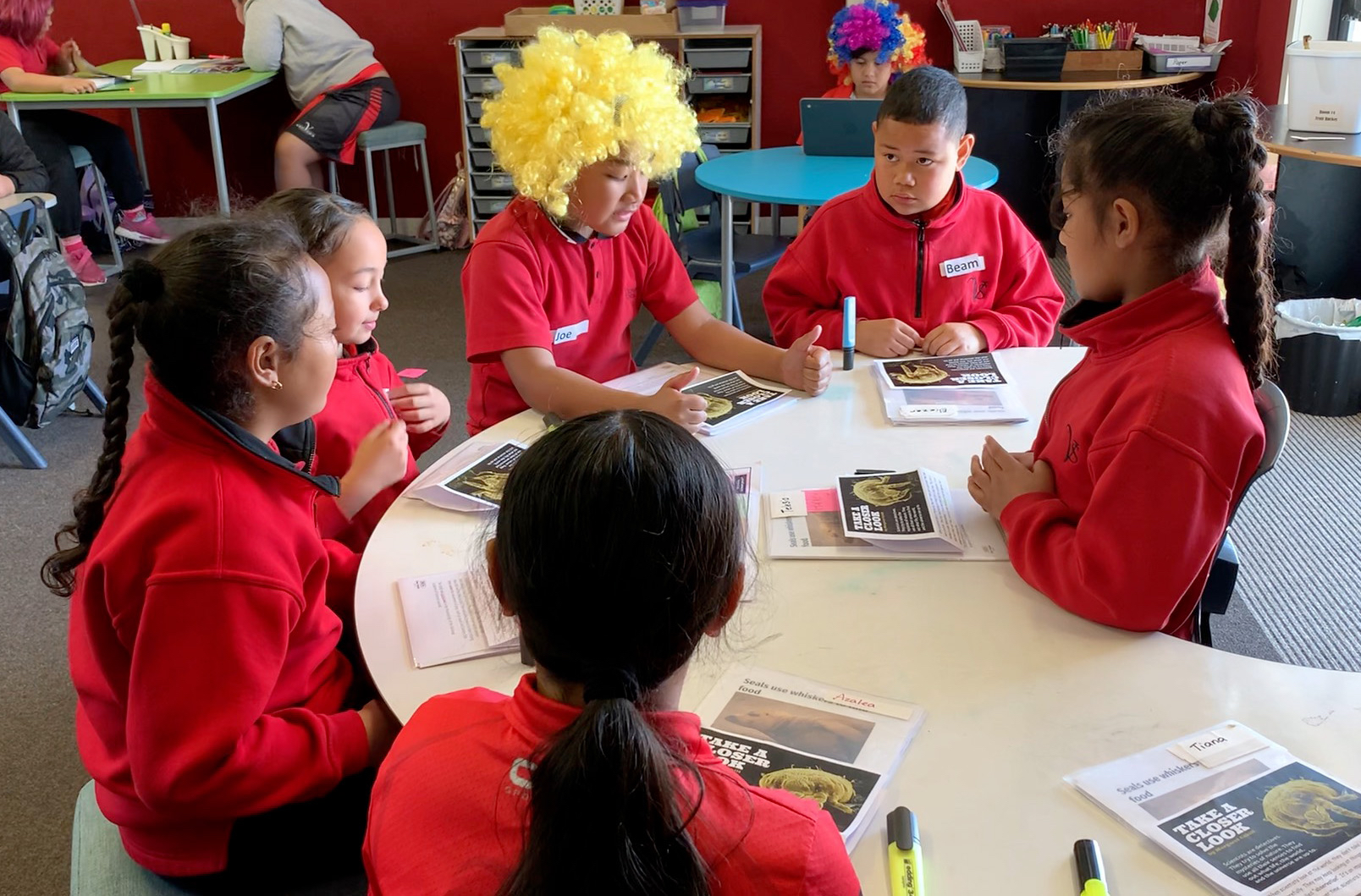
The change in this senior class came from a desire to continue to embed high expectation practises, alongside wanting students to be able to drive their own learning, and take a greater degree of student agency. The class often starts with a daily review, or maybe some kind of whole class problem solving. This shared starting point helps reinforce prior knowledge, clarify understanding and set the expectation that all students are capable of engaging in the learning ahead. Next is workshops based on the curriculum progress steps with a chart on the wall to support students in the process. Students create weekly timetables and are supported to plan their week, choosing workshops that best meet their learning needs. They then complete follow up tasks related to the workshop they have attended.
Students self-mark much of their work and when they feel confident, they are able to complete a summative assessment. There are options for further learning should they feel they need to build their understanding. If they are not sure about something, they are encouraged to use resources and ask people in the classroom before asking the teacher, fostering collaboration and a shared responsibility for learning. The teacher keeps an eye out for students who may be unsure of what to do and checks with students in one-on-ones – “what did you do yesterday and what are you going to do today?” Assessment is also a shared process. Students keep a record of their maths progress and can give feedback about the workshops: what they found difficult, and what else they would have liked. They can also give feedback about the teacher, this reinforces the concept of a collaborative space where their voice and ideas matter.
Year 6 Writing
Year 6 writing is also a time when students are encouraged to be an active participant in their learning and there are no set groups. Here the teacher puts three curriculum progress steps on the board and the students put a sticker beside the one they choose to work on for the current week, again promoting student agency. Monday is the writing launch for the week, Tuesday and Wednesday are independent planning/writing sessions while attending workshops for the students chosen progress steps. In one of the workshops a focus is on how to evidence the progress step in their writing. Students are encouraged to evidence their progress step and knowledge gained from workshops within their weekly writing. School wide success criteria for each progress step supports them to do this. At the end of the week there is a feedback session – where they pair up with someone in their workshop and give feedback on how they did with that progress step. Partners are encouraged via the TAG feedback system to give positive feedback and possible suggested next steps.
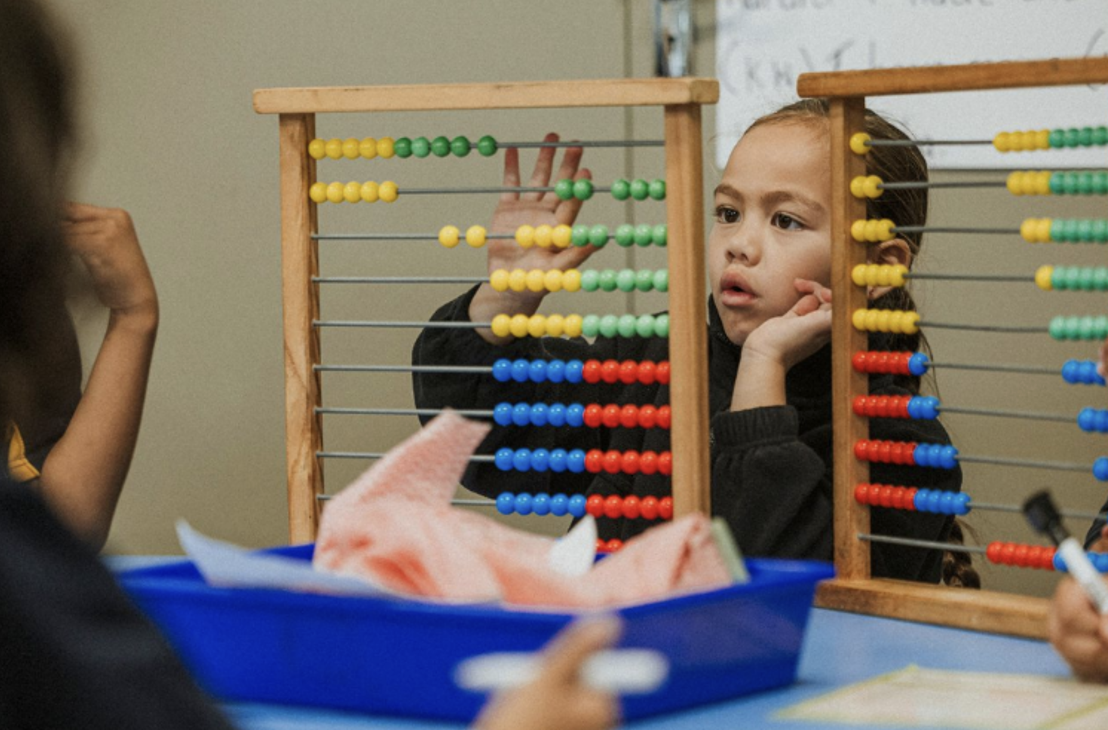
Year 1 & 2 Reading
Following the high expectation teaching training and drawing on training in cultural responsive practices, two teachers in the junior school decided to look more deeply into flexible reading groups. How they approach it now is to first let the students know what their colour-wheel is, their level, and then provide them with a box containing a range of books –some below their level, some at the same level and some one or two levels above. The students then choose the book they are going to work on for that day. With children choosing their book, it means they have the agency and power. Students choosing the book they want to read leads to engagement. The teacher makes up groups based on who has chosen the same book. It was important to explain this approach to parents. The school provides bookmarks with questions parents can ask to support their child’s reading. It also explains they may bring home a book that might be quite challenging but they are capable of it with their parent’s support.
The teachers also drew on their recent BSLA training to teach children how to sound out words. Whole class teaching is regulalry used with reading and, because some students enjoy being the teacher, they have the opportunity to read to the class, but, to do this they have to practice and be fluent. Scaffolding is where some students in the group can move on whilst others stay longer to master a particular element. If the success criteria is there for the children, it makes it easier to scaffold off and for the children to know where they need to go for workshops or for more support.
Relationships in the Year 1 & 2 Class
Relationships are a key pillar of high expectation teaching. Teachers want the students to feel happy and safe so they can take risks and make mistakes. Sometimes they can have their moments but they know when they’re expected to work and to have a go. You can’t do that if you don’t have strong relationships. Working closely with parents is important. One teacher gave the example of struggling to teach the concept of ‘before’ and ‘after’ in the context of maths to two students whose first language was not English. The students were finding the concepts difficult so the teachers asked a parent from the same culture to come into the classroom and use the home language to explain it.
4. What does success look like?
In the past, you would see students whose confidence and engagement had been knocked by reports saying they were ‘below’. Now that confidence and engagement is improving. It’s great to see kids helping each other out, and to see those who may have been in a bottom group previously now grow in confidence sitting alongside others in their heterogenous groups, and contributing. This is especially visible in the senior students.
The school completes the ‘well-being survey’ each year which provides useful data regarding how students are feeling about learning, how they are feeling about being safe and if they are enjoying being at school.
Further Reading
1. Kōkirihia website. Case study ofGreen Bay Primary School and resources on high expectation teaching.


.jpg)